What the Anion Gap Measures
The anion gap is a computed value that helps medical professionals assess electrolytes in the context of acid base status. It is based on routine serum chemistry results, most commonly sodium, chloride, and bicarbonate. Because the body maintains charge balance, the difference between measured cations and anions can reveal unmeasured acids or other metabolic abnormalities.
In clinical laboratory review, the anion gap acts as a triage tool rather than a diagnosis by itself. A shift in the gap can indicate a specific diagnostic approach, especially when paired with a blood gas and the overall clinical evaluation. When the gap is elevated, it often points toward a high anion gap metabolic acidosis; when it is normal, other patterns such as normal anion gap metabolic acidosis may be more likely.
The value is influenced by unmeasured ions, especially albumin, which is a major negatively charged protein in plasma. Because albumin affects the apparent gap, many clinicians use albumin correction to enhance interpretation. This matters in critical care, where a patient may have severe illness, low albumin, and a misleadingly “normal” result despite a meaningful acid-base disorder.
How Lactate Elevation Matters
Lactate is a major laboratory marker when evaluating metabolic acidosis. A elevation in serum lactate often suggests poor oxygen delivery or higher production, and the term lactate elevation is commonly used when levels rise above the reference interval. Marked lactate elevation can be a sign of lactic acidosis, especially when accompanied by acidemia on blood gas testing.
One of the most important mechanisms is tissue hypoperfusion, where blood flow is inadequate for metabolic demand. Under these conditions, cells rely more heavily on anaerobic metabolism or anaerobic glycolysis, which drives up lactate production. The resulting metabolic derangement may arise rapidly in conditions such as sepsis or shock.
Not every elevated lactate indicates the same severity or cause. Some patients have elevated lactate from stress physiology, medications, seizures, or impaired clearance, while others have severe lactic acidosis requiring immediate intervention. That is why the anion gap calculator is helpful: it helps connect lactate results to the broader acid-base pattern and assists risk stratification.
How to Use Anion Gap Calculator
An anion gap calculator is a handy utility for entering serum chemistry values and swiftly determining the gap. In many situations, you will input sodium, chloride, and bicarbonate, along with albumin if you need a corrected result. This can be done at point of care or during chart review as part of a systematic diagnostic approach.
Proceed with the basic electrolyte panel and check that the lab values are current and internally consistent. Then assess the number in context: Is the patient acidemic on blood gas? Is there lactate elevation on serum lactate? Is there renal dysfunction or another known cause of metabolic acidosis? The calculator is most useful when paired with the rest of the serum chemistry and the clinical picture.
Albumin correction is particularly important when albumin is low. Because low albumin lowers the measured anion gap, a patient may appear to have a normal result even when a important underlying cause is present. A corrected anion gap can more effectively reflect the true acid-base balance and strengthen interpretation of the lab analysis.
Formulas, Standard Ranges, and Meaning
The most frequently used anion gap formula is:
Anion gap = Sodium - (Chloride + Bicarbonate)
Some calculators may include potassium, but most standard clinical formulas do not. Selecting the formula affects the reference interval, so the reported value should always be interpreted using the matching method as the lab or calculator.
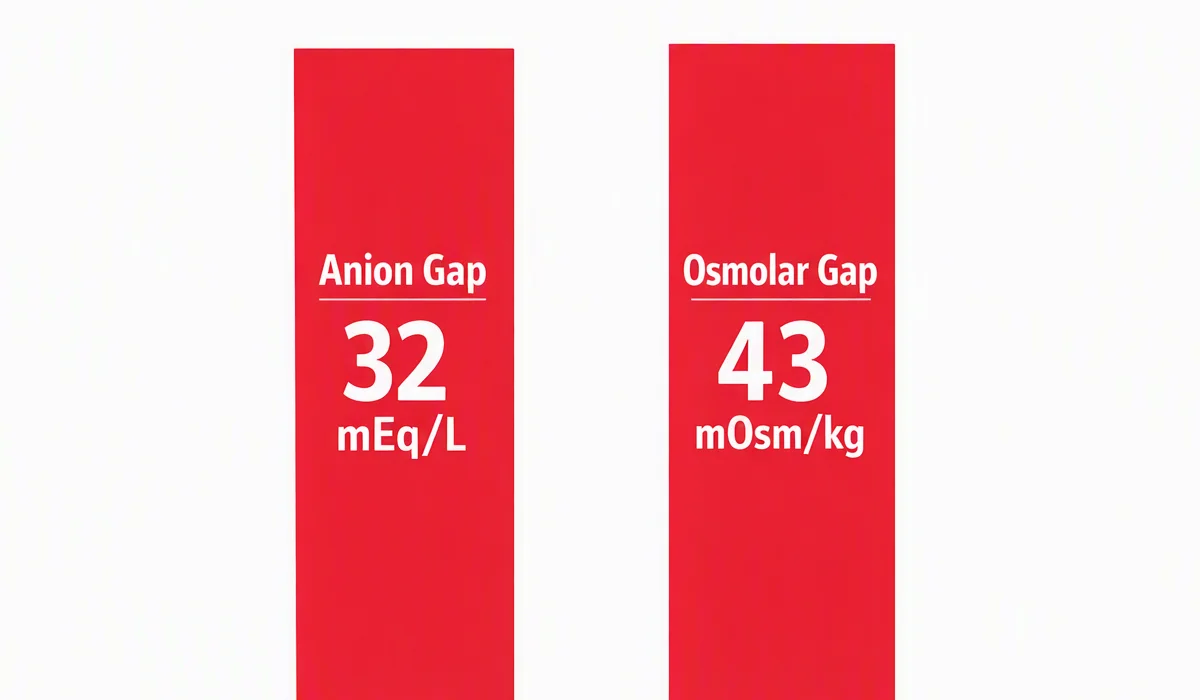
The normal anion gap generally falls within the lab’s reference range, which can vary by institution and methodology. A typical reference range is modestly positive, but clinicians should rely on the lab-specific range rather than a universal cutoff. A high result suggests increase of unmeasured anions and raises concern for high anion gap metabolic acidosis.
Interpretation should always consider the broader acid-base balance. For example, a patient may have metabolic acidosis with low bicarbonate, elevated lactate, and a clearly elevated anion gap. Another patient may have a mixed disorder, where compensation or concurrent processes obscure the expected pattern. In this setting, a blood gas helps confirm pH status and assess the compensatory response.
Common Causes of Elevated Anion Gap with High Lactate
The typical context for elevated anion gap with high lactate is poor perfusion or severe systemic illness. Sepsis and shock are leading causes because both can reduce oxygen delivery and drive anaerobic metabolism. In this setting, lactate is both a diagnostic marker and a severity indicator, and the anion gap may rise as lactate accumulates.
Hypoxia can also drive lactate production even without profound hypotension. Respiratory failure, severe anemia, or impaired oxygen utilization may result in elevated serum lactate and a metabolic acidosis pattern. The anion gap calculator helps identify whether the chemistry profile is compatible with a high anion gap state.
Medication-related causes matter as well. Metformin is a classic example, especially when accumulation occurs in the setting of renal dysfunction, hypoperfusion, or other stressors. While metformin does not cause lactic acidosis in every patient, it is an important underlying cause to consider when reviewing the diagnostic approach.
Other common contributors to high lactate and an elevated anion gap include severe liver dysfunction, generalized tissue ischemia, and some toxin exposures. The key point is that lactate elevation is a signal, not a final diagnosis. It should trigger follow-up testing and a search for the mechanism driving the metabolic derangement.
When Lactate Is Considered High but the Anion Gap Remains Normal
A raised lactate level does not necessarily produce a raised anion gap. This can happen when the acid-base picture is blended, when bicarbonate and chloride changes counteract one another, or when the lactate rise is mild. In some patients, the result appears as normal anion gap metabolic acidosis rather than a classic high-gap pattern.
Albumin is a major reason for this discrepancy. If albumin is low, the measured anion gap may be incorrectly reduced. In that setting, albumin correction can uncover what would otherwise appear as a normal result. This is especially important in critical care patients, where low albumin is common and the risk of missing a important acid-base disorder is higher.
The delta gap can also assist. By comparing the change in the anion gap with the change in bicarbonate, clinicians can look for mixed acid-base disorders. A patient may have lactic acidosis plus a concurrent metabolic alkalosis or normal-gap acidosis, which makes the simple gap alone less reliable. Using delta gap analysis improves interpretation and helps avoid premature conclusions.
Medical Issues and Interpretation Problems
Various issues can distort anion gap readings. First, lab error or specimen concerns can yield misleading electrolyte results, so unexpected results should be confirmed when the clinical picture does not fit. Even minor errors in sodium, chloride, or bicarbonate can change the calculated gap.
Next, an apparent acid-base disorder may be misread if the blood gas is ignored. A patient can have metabolic acidosis on chemistry testing but a pH that appears near normal because of respiratory compensation or a mixed disorder. The blood gas is therefore essential for complete assessment.
Hyperchloremia can also obscure an elevated gap. If chloride rises while bicarbonate falls, the gap may remain in the normal range despite an underlying acid accumulation. This is a frequent pitfall when interpreting normal anion gap metabolic acidosis and when assessing fluid-related changes in the electrolyte panel.
Renal failure is another key confounder. Reduced acid excretion can produce metabolic acidosis through several mechanisms, including retention of unmeasured acids and impaired clearance of lactate or other metabolites. In kidney dysfunction, the anion gap may go up, stay normal, or reflect a mixed picture depending on the stage and accompanying processes.
Stepwise Illustrative Worked Calculations
Example 1: A patient has sodium 140, chloride 102, bicarbonate 18, and a lactate level that is elevated. Using the anion gap formula:
140 - (102 Informative post + 18) = 20
This represents a increased anion gap metabolic acidosis pattern. When blood gas shows low pH, the diagnosis is compatible with metabolic acidosis, and the elevated lactate level supports lactic acidosis as a probable explanation.
Second example: Another patient has sodium 138, chloride 108, bicarbonate 24, and lactate elevation. The calculation is:
138 - (108 + 24) = 6
In this case the anion gap appears normal. If albumin is low, albumin correction may increase the corrected anion gap and reveal hidden high-gap physiology. When the patient has diarrhea, saline exposure, or another acid-base disorder, the pattern may instead reflect normal anion gap metabolic acidosis or a mixed state.
Case 3: A third patient has sodium 132, chloride 95, bicarbonate 12, and elevated serum lactate. The gap is:
132 - (95 + 12) = 25
This points strongly to a high anion NAGMA causes gap metabolic acidosis. When pH is low on blood gas, the result supports severe metabolic acidosis and should prompt urgent evaluation for sepsis, shock, hypoxia, toxic ingestion, or renal failure, depending on the clinical setting.
When to Order Further Testing or Order Additional Tests
Escalation is appropriate when lactate elevation is significant, the pH is low, the anion gap is rising, or the patient appears unstable. A blood gas is useful because it shows the acid-base status directly and helps determine whether the patient is acidemic, compensated, or part of a mixed process. In serious illness, trend the serum lactate rather than relying on a single value.
Additional tests should be guided by the suspected underlying cause. If ketosis is possible, order ketones. If ingestion is a concern, evaluate for toxic alcohols. If renal failure is present or suspected, assess kidney function, urine output, and related electrolyte changes. When the presentation suggests severe infection or circulatory collapse, immediate management for sepsis or shock may be needed while workup continues.
The best strategy is a systematic assessment approach: check the electrolyte panel, confirm the blood gas and pH, assess albumin correction, calculate the corrected anion gap, and then identify the most likely cause. In many cases, following up with serum lactate and other labs helps clarify whether treatment is restoring perfusion and acid-base balance.
FAQ
How does anion gap calculator help with lactate elevation?
Anion Gap Calculator helps connect lactate elevation to the overall acid-base pattern. If lactate is high and the gap is elevated, that supports lactic acidosis and high anion gap metabolic acidosis. It also helps clinicians judge whether the result fits the rest of the serum chemistry and whether more clinical evaluation is needed.
Can lactate be high if the anion gap is normal?
Yes. Lactate can be high with a normal anion gap, especially if there is a mixed acid-base disorder, a mild lactate rise, or low albumin that obscures the true gap. In that situation, albumin correction and delta gap analysis can refine interpretation.
Should the anion gap be corrected for albumin?
Frequently, yes. Albumin is a major unmeasured anion, so low albumin can make the measured anion gap look falsely normal or less abnormal than it actually is. Albumin correction improves accuracy and is especially helpful when evaluating metabolic acidosis in critically ill patients.
What conditions most commonly cause a high anion gap with elevated lactate?
The most common causes include sepsis, shock, and hypoxia because they limit oxygen delivery and promote anaerobic metabolism. Other important causes include renal failure, metformin-associated lactic acidosis, and other causes of impaired perfusion or impaired clearance.
What additional tests should be ordered when lactate elevation is suspected?
Common follow-up testing includes a blood gas, repeat serum lactate, ketones, and evaluation for toxic alcohols when ingestion is possible. Depending on the case, clinicians may also assess renal failure, infection, oxygenation, and other contributors to the acid-base disorder.